

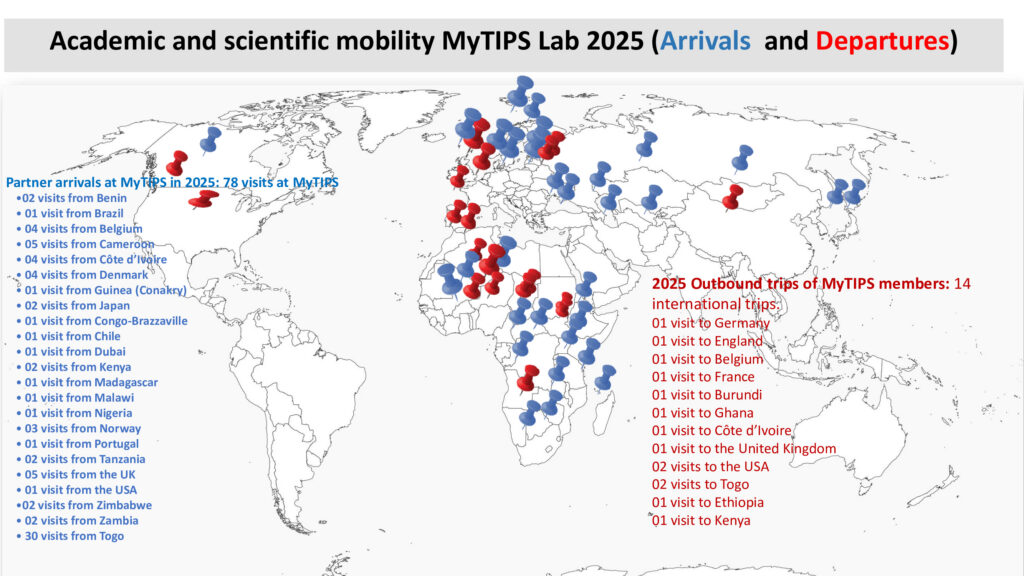
In 2025, MyTIPS Lab demonstrated strong academic and scientific dynamism through extensive inbound and outbound mobility. A total of 78 partner arrivals strengthened collaboration, knowledge exchange, and joint research activities focused on fungal diversity, taxonomy, and conservation strategies. In parallel, MyTIPS members undertook 14 international outbound trips across Europe, Africa, and North America, fostering partnerships on sustainable use, monitoring, and preservation of fungal resources. These mobilities enhanced capacity building, technology transfer, and the harmonization of conservation approaches. Overall, academic mobility in 2025 significantly contributed to advancing fungal conservation efforts, reinforcing MyTIPS’ leadership in mycology and biodiversity conservation at regional and global levels

On the morning of November 10, 2025, a delegation from the 4th Congress of the International Society for Fungal Conservation (ISFC4) visited MyTIPS at the University of Parakou, Benin. The visit provided an opportunity for delegates to explore the laboratory’s innovative research in fungal conservation and sustainable use. During their visit, they engaged with researchers to exchange ideas on how scientific knowledge can enhance community livelihoods and biodiversity conservation. The delegation also held a productive meeting with the Vice-Rector. Later, the group traveled to Papatia to meet with beneficiaries of the FC-SSA project and observe ongoing field activities. This visit highlights the strong connection between research, education, and local action, and underscores the role of scientific collaboration in advancing sustainable conservation.

The 4th International Congress of the International Society for Fungal Conservation (ISFC4) was successfully held from November 3 to 7, 2025, in Cotonou, Benin marking a historic first in Africa! The event brought together over 80 participants from more than 30 countries researchers, students, IUCN experts, and biodiversity actors all united under the theme: “Mainstreaming Fungal Conservation” Integrating fungal conservation into global biodiversity policies. For five days, the congress featured inspiring conferences, panel discussions, and workshops addressing the crucial role of fungi the often-forgotten heroes of our ecosystems and the need to include them in conservation priorities. In this national TV report, listen to the reactions of Professor Nourou Soulemane Yorou, President of the Organizing Committee, and Professor Brice Sinsin, who both highlight the scientific and symbolic significance of this milestone event for Africa. A big congratulations to the organizing team, partners, and participants for this remarkable success that proudly places Benin on the global map of fungal conservation. 🎬 Watch the video below to relive the key moments and reflections from ISFC4! https://drive.google.com/file/d/1TM44oMyEmGrFmHysFng-3GH6a3UdYqeo/view?usp=sharing #ISFC4 #FungalConservation #FungiMatter #ScienceForNature #Benin #Africa

This afternoon, Dramani Ramdan participated in a high-level meeting with Dr. Vivek Menon, newly elected Chair of the IUCN Species Survival Commission, during his official visit to Benin. The gathering brought together members of IUCN-Benin and the SSC Committee to discuss the country’s contribution to species conservation. During the discussions, Dramani passionately advocated for the recognition of fungi as key components of biodiversity, emphasizing their essential ecological roles, from soil regeneration to forest resilience, and their contribution to local livelihoods. He called for their integration into international and national conservation policies, ensuring that fungi are no longer overlooked in global biodiversity agendas.

Fati Sambo, the FC-SSA project focal point, took part in the Fourth International Congress on Conservation organized by the International Society for Fungal Conservation (3–7 November 2025, Benin). She highlighted the collaboration as a local partner of the project and shared the activities carried out by the Papatia community, including ectomycorrhizal tree nurseries and forest restoration efforts from seed collection and nursery management to reforestation. She emphasized the support provided by the project, including training on mushroom cultivation and the income earned from project activities, praised the initiative, and offered strong recommendations for ensuring the project’s sustainability. The International Society for Fungal Conservation awarded the women of Papatia for their remarkable commitment to fungal conservation through the FC-SSA project. The active integration of local communities, particularly women, aligns with sustainable forest and fungal conservation goals, reinforcing their essential role in environmental stewardship.
Fungal Resources for Human Well-being: Implications for Poverty and Gender Inequality in Sub-Saharan Africa Our new article presents the first large-scale synthesis on the role of wild useful fungi (WUF) in Sub-Saharan Africa. From 95 scientific papers, we identified 396 fungal species, including 47 with medicinal uses. These fungi are rich in proteins, vitamins, and minerals, contributing significantly to nutrition, food security, and traditional healthcare. Economically, WUF harvesting and trade mostly led by rural women provide essential income that supports families’ food, education, and health needs. However, challenges like deforestation, under-documentation, and gender inequality threaten their sustainable use. The study calls for inclusive policies, cultivation programs, and value chain strengthening to unlock fungi’s full potential for sustainable development. Read more: https://urlr.me/Pn8Mrx

Festivity as a Conservation Strategy in West Africa In northern Benin, conservation took an unexpected turn it began with music, laughter, and community spirit. Our new article reveals how festivities became a driving force for forest restoration, turning scientific work into a collective celebration of life. Through the Fungal Conservation Project, local communities restored fungi-rich forests by planting native ectomycorrhizal trees while embracing traditional songs and joyful gatherings. These cultural moments united generations, inspired women’s participation, and built a deeper bond between people and nature. This experience reminds us that true conservation is not only ecological, but deeply human where science, culture, and emotion meet to sustain both forests and communities. Read more: https://urlr.me/HCYUfp

Monday, November 3rd, marked the opening of ISFC4, attended by university authorities, IUCN officials, and research stakeholders. Under the theme Mainstreaming Fungal Conservation, the five-day congress brings together 72 mycologists and researchers from 27 countries to share scientific advances on fungi and their integration into biodiversity conservation strategies. The evening featured an online side event with African CBD focal points (Benin, Algeria, Madagascar, Senegal, Burkina Faso, Togo, Tunisia, Mali, and others), several of which agreed to include fungi in their #NBSAPs (National Biodiversity Strategies and Action Plans). #FungalConservation #Biodiversity #Mycology #ISFC4 #AfricanBiodiversity #ResearchForNature #SustainableFuture #NatureMatters #ScienceForConservation.

From August 25 to 29, 2025, the Fungal Conservation in Sub-Saharan Africa (FC-SSA) project team, together with local beneficiary communities, carried out a large-scale forest reforestation activity. The initiative took place in the community forests of Fouctoume, Kopeinko, and Koubirgou, where the strong involvement of women was particularly remarkable. During this activity, 1,327 Afzelia seedlings, produced by the communities themselves, were successfully transplanted. This follows a previous restoration effort in June 2025 in the community forests of Koka and Aboldé, which led to the transplantation of 1,200 seedlings. Together, these efforts reflect the core objectives of the FC-SSA project: to restore community forests with 3,000 ectomycorrhizal tree species in close collaboration with local communities, strengthening both biodiversity conservation and sustainable livelihoods.