FC SSA

Awareness session

Awareness session, Exhibition

Advocating for Fungal Conservation in Benin

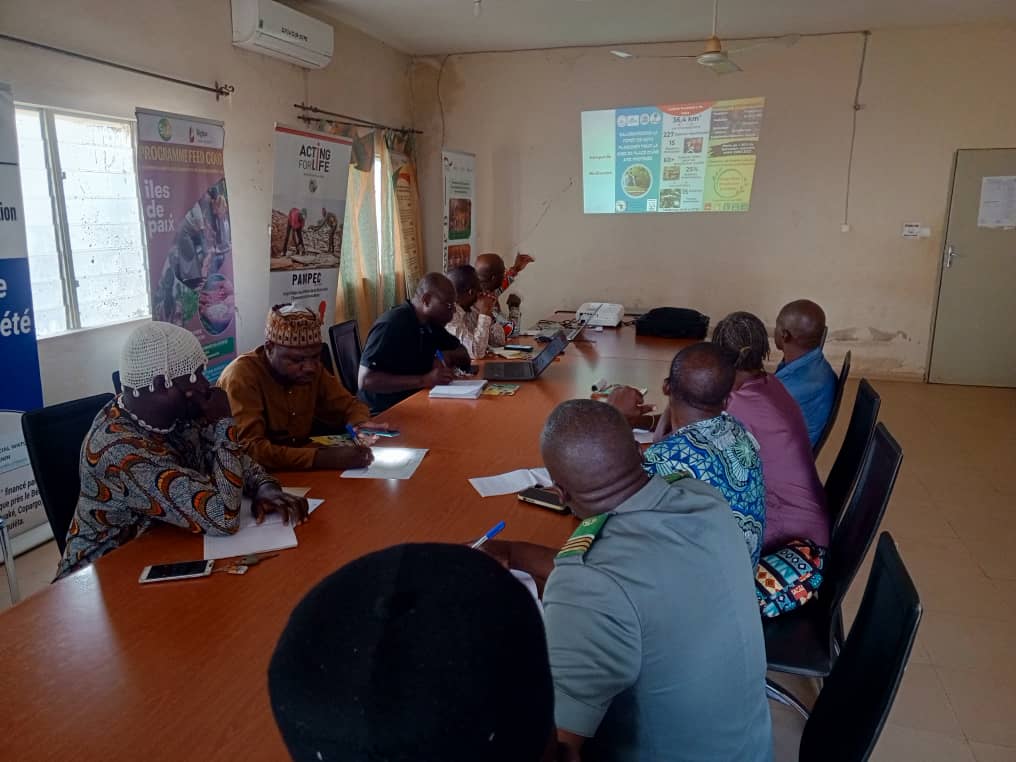
This afternoon, Dramani Ramdan participated in a high-level meeting with Dr. Vivek Menon, newly elected Chair of the IUCN Species Survival Commission, during his official visit to Benin. The gathering brought together members of IUCN-Benin and the SSC Committee to discuss the country’s contribution to species conservation. During the discussions, Dramani passionately advocated for the recognition of fungi as key components of biodiversity, emphasizing their essential ecological roles, from soil regeneration to forest resilience, and their contribution to local livelihoods. He called for their integration into international and national conservation policies, ensuring that fungi are no longer overlooked in global biodiversity agendas.

Awareness session, Exhibition

🌿 Getting Local Communities in International Congress: The Voice from Papatia on the Darwin Main Project 30-020 🌿

Fati Sambo, the FC-SSA project focal point, took part in the Fourth International Congress on Conservation organized by the International Society for Fungal Conservation (3–7 November 2025, Benin). She highlighted the collaboration as a local partner of the project and shared the activities carried out by the Papatia community, including ectomycorrhizal tree nurseries and forest restoration efforts from seed collection and nursery management to reforestation. She emphasized the support provided by the project, including training on mushroom cultivation and the income earned from project activities, praised the initiative, and offered strong recommendations for ensuring the project’s sustainability. The International Society for Fungal Conservation awarded the women of Papatia for their remarkable commitment to fungal conservation through the FC-SSA project. The active integration of local communities, particularly women, aligns with sustainable forest and fungal conservation goals, reinforcing their essential role in environmental stewardship.

Awareness session, Capacity bulding, Exhibition

New Publication under the Fungal Conservation in Sub-Saharan Africa Project!

Festivity as a Conservation Strategy in West Africa In northern Benin, conservation took an unexpected turn it began with music, laughter, and community spirit. Our new article reveals how festivities became a driving force for forest restoration, turning scientific work into a collective celebration of life. Through the Fungal Conservation Project, local communities restored fungi-rich forests by planting native ectomycorrhizal trees while embracing traditional songs and joyful gatherings. These cultural moments united generations, inspired women’s participation, and built a deeper bond between people and nature. This experience reminds us that true conservation is not only ecological, but deeply human where science, culture, and emotion meet to sustain both forests and communities. Read more: https://urlr.me/HCYUfp

Awareness session, Capacity bulding, Exhibition

First Day of the 4th Congress of the International Society for Fungal Conservation (ISFC4)

Monday, November 3rd, marked the opening of ISFC4, attended by university authorities, IUCN officials, and research stakeholders. Under the theme Mainstreaming Fungal Conservation, the five-day congress brings together 72 mycologists and researchers from 27 countries to share scientific advances on fungi and their integration into biodiversity conservation strategies. The evening featured an online side event with African CBD focal points (Benin, Algeria, Madagascar, Senegal, Burkina Faso, Togo, Tunisia, Mali, and others), several of which agreed to include fungi in their #NBSAPs (National Biodiversity Strategies and Action Plans). #FungalConservation #Biodiversity #Mycology #ISFC4 #AfricanBiodiversity #ResearchForNature #SustainableFuture #NatureMatters #ScienceForConservation.

Activities, Awareness session, Capacity bulding

Official launch of the forest seed harvesting campaign.

As part of executing the activities of the Fungal Conservation in South-Saharan Africa Darwin main project 30-020 (FC-SSA), a project team carried out the « Official Launch of the Forest Seed Harvesting Campaign and Discussions with Nursery Growers in the Villages Benefiting from the FC-SSA Project. » In these villages, teams of 6 to 10 people, with more than 50% women, were formed for the installation of nurseries, as well as the monitoring and maintenance of the plants. The teams were trained on identifying target species (Afzelia africana, Isoberlinia tomentosa, Isoberlinia doka, Uapaka togolensis, Berlinia grandiflora, and Monotes kerstingii) and seed conditioning. Cash collection and storage equipment were also provided to these teams. This mission also included the potting activity, where 4000 pots were prepared to facilitate the nursery establishment. This initiative not only empowered the local communities but also helped in fostering sustainable practices for seedling management and forest conservation. The project is set to positively impact the biodiversity of the region, contributing to the restoration of essential forest ecosystems and promoting the sustainable use of natural resources.

Awareness session, Exhibition

MyTIPS at COP16: Fungal Conservation on the Global Stage

From October 20 to 31, 2024, MyTIPS, led by Prof. Nourou S. Yorou, actively participated in the 16th Conference of the Parties (COP16) to the Convention on Biological Diversity (CBD) held in Cali, Colombia. The COP meetings serve as platforms for stakeholders to exchange updates on progress in biodiversity documentation and conservation efforts. COP16, with a total of 20,000 participants, was particularly significant as it focused on reviewing the implementation of the Kunming-Montreal Global Biodiversity Framework. Prof. Yorou’s participation as a mycologist at such a high-level diplomatic and political forum is a first, not only for the Beninese delegation but in the history of COPs. It is well-known that fungi were overlooked at the original CBD meeting in Rio de Janeiro in 1992. However, for the past two decades, efforts have been underway to raise awareness among the public, conservators, and policymakers about the urgent need to protect fungi, which play crucial roles both upstream and downstream in trophic chains. Prof. Yorou’s involvement aimed to bring the voice of fungi to the biodiversity conservation table, while also urging global conservation bodies to take more inclusive actions for fungi. Numerous exchanges and sessions, coordinated by Prof. Yorou, facilitated the sharing of Benin’s experiences in fungal conservation through the « Fungal Conservation in Sub-Saharan Africa » project. Attached are some images from the event, and an audio element can be accessed through the link provided. MyTIPS continues to push the boundaries of fungal ignorance, harnessing the power of collective effort and advancing research on fungi to maximize their utility in biodiversity conservation

Awareness session, Exhibition, Exploring

Conservation with an impact : Fungi and Indigenous Knowledge – Benin

Discover our groundbreaking project in Benin, where scientists and community leaders unite to elevate the role of fungi in biodiversity conservation. Supported by the Darwin Initiative, we’re committed to sustainable practices that empower local communities while preserving vital ecosystems https://www.permaculture.org.uk/articles/conservation-impact-fungi-and-indigenous-knowledge-benin

Awareness session, Exhibition

Exclusive Interview with Prof Yorou: The FC-SSA Project and Fungi Conservation in Daabaaru Newspaper

Mushrooms are crucial for the stability of forest ecosystems and play a vital role in the well-being of communities. However, they are often overlooked in conservation efforts. This is the driving force behind the FC-SSA project, which aims to provide data on mushrooms and offer policy recommendations to ensure their inclusion in conservation strategies, as mandated by the Convention on Biological Diversity (CBD). The project also aims to raise awareness about habitat conservation across sub-Saharan Africa. It operates in Birni, Perma, and Koutouponga in northern Benin, as well as in Zimbabwe. In an exclusive interview with Daabaaru Newspaper, the project Leader, Prof. Yorou stressed the importance of preserving mushrooms and called on policymakers to explicitly integrate them into environmental management and protection plan

Awareness session

Establishing a Protected Area: Collaborative Efforts for the Preservation of the Kota Waterfall Ecosystem in Northern Benin

From September 11-13, 2024, a team from the University of Parakou visited Natitingou to launch discussions on creating a protected area around the Kota Waterfall. This initiative, supported by local authorities, traditional leaders, and other stakeholders, aims to safeguard the rich biodiversity and cultural heritage of the region while addressing pressing environmental threats. During the mission, the team met with municipal and village leaders to explore the ecological importance of the site and its potential for job creation, cultural preservation, and environmental sustainability. However, several challenges were identified, including land ownership issues, water pollution, and the impact of illegal gold mining.Despite these challenges, the mission concluded with strong support from local stakeholders. The next steps include presenting the project at the Administrative Conference, engaging local communities in the conservation effort, and exploring sustainable solutions to the region’s mining activities. This mission was part of a broader conservation project funded by the Darwin Initiative, focused on preserving the biodiversity of edible mushrooms in Sub-Saharan Africa. The establishment of a protected area at Kota will contribute to safeguarding the region’s natural and cultural assets for future generations.

Awareness session, Capacity bulding

Capacity Building: FC-SSA Trains Women Beneficiaries in Mushroom Production

From August 20th to 21st, 2024, the FC-SSA project organized a training session on edible mushroom production for 10 women. The training was conducted by Azize Boukary, a PhD student at MyTIPS, University of Parakou. Coming from three villages (Tassigourou, Papatia, and Sinaissiré), the participants were trained in substrate selection techniques, pasteurization, inoculation, and given a brief explanation of seed production. Highly committed and determined, these women paid attention to the training, which offers them a new income-generating activity while helping to reduce poverty and gender inequalities. It is important to note that this training is part of a series of training initiated by the FC-SSA project.

Retour en haut